
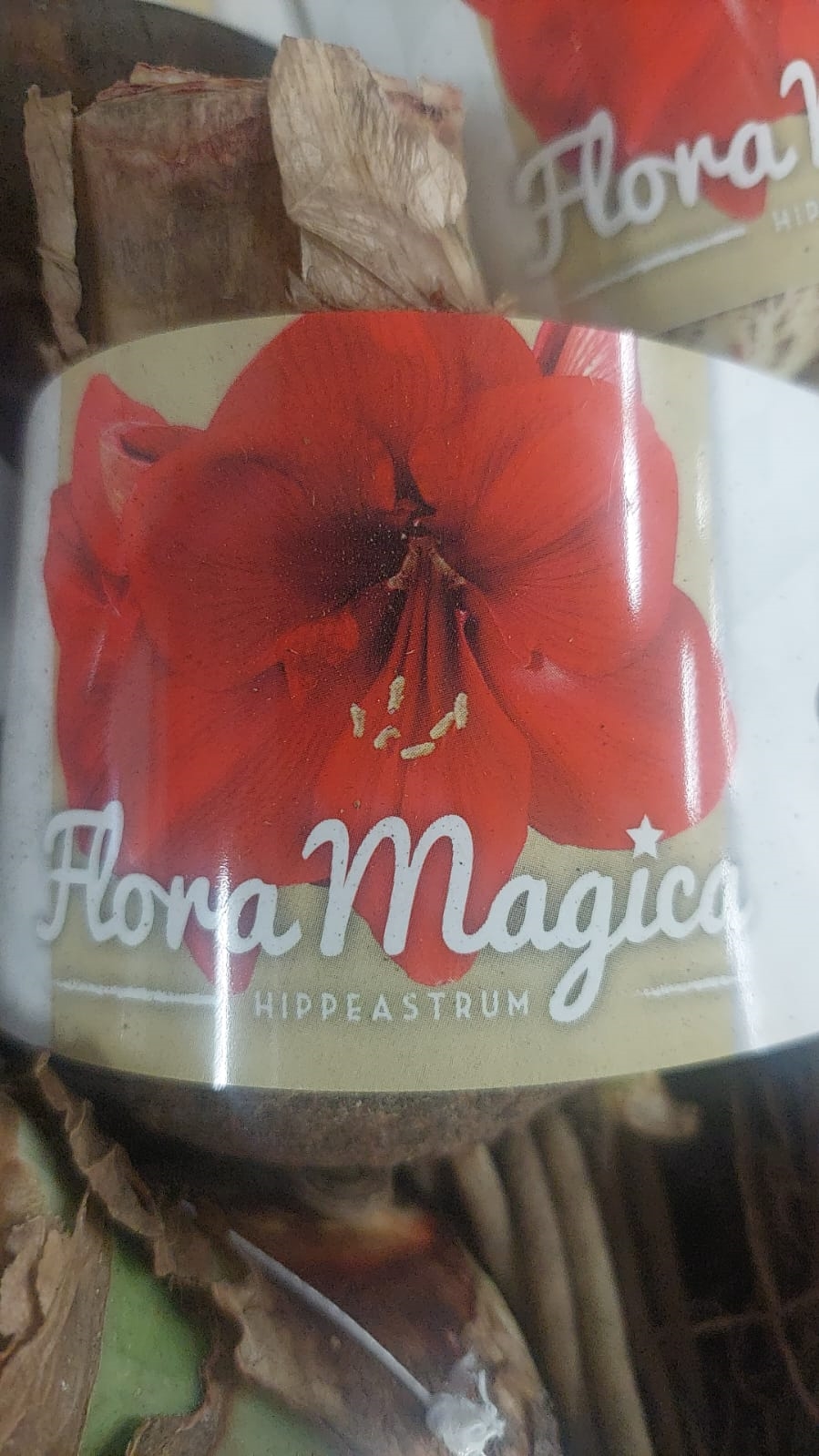
Hippeastrum Red
Order Code: 600-04Please allow 5 working days for postage
£6.50
Hippeastrum (Amaryllis) are the undisputed stars of the winter windowsill – bold, dramatic and almost effortless. When the garden outside has slipped into its seasonal rest, these magnificent bulbs step into the spotlight, sending up sturdy stems topped with sumptuous trumpets of colour.
Our large 30/32 bulbs are a true premium grade, carefully selected for their strength and flower quality. This generous bulb size stores plenty of energy, giving you powerful, upright stems and multiple blooms in rich, velvety shades – from crisp whites and soft pinks to deep reds and striking bi-colours. Each bulb becomes a living sculpture, transforming a windowsill, side table or dining room into an instant winter display.
Simply pot them up in a snug, free-draining container, leave the top third of the bulb exposed, and place in a warm, bright spot indoors. In just a few short weeks you’ll be rewarded with a spectacular show of flowers at a time of year when colour is most welcome – perfect for brightening your own home or gifting as a luxurious, living present.
Planting Instructions
When to Plant
- Indoors: Any time from autumn through late winter, depending on when you’d like them to flower.
- Allow 6–8 weeks from planting to bloom in a warm room.
Pot & Compost
- Choose a heavy pot about 15–18 cm (6–7") in diameter per bulb – just big enough to leave about 2–3 cm (1") space around the bulb.
- Use a free-draining, peat-free compost, such as a quality houseplant or loam-based compost mixed with a little grit or perlite for drainage.
- Ensure there is a drainage hole in the base of the pot.
Planting Depth
- Sit the bulb on a layer of compost and fill around it, leaving the top third of the bulb above the compost.
- Firm the compost gently so the bulb is secure and won’t wobble once it starts to grow.
- Water once after planting to settle the compost, then allow any excess water to drain away.
Position & Watering
- Place in a warm, bright spot indoors – a sunny windowsill is ideal. Aim for 18–22°C.
- Water sparingly at first:
- Keep the compost just barely moist while roots are forming.
- Once the flower stem appears and starts to grow strongly, increase watering so the compost stays evenly moist, never waterlogged.
- Avoid leaving the pot standing in water.
Feeding
- As the flower stem and leaves develop, feed every 2 weeks with a balanced liquid fertiliser (houseplant or tomato feed diluted as directed).
- Continue feeding while leaves are green and active after flowering – this builds the bulb up for next year.
Support & Turning
- Tall stems can get top-heavy; use a small stake or plant support if needed.
- Turn the pot a little every few days to keep the stem growing straight towards the light.
After Flowering
- When the flowers fade, cut off the spent blooms, but leave the flower stem and leaves until the stem begins to yellow – then cut it back.
- Keep the plant in a bright spot and continue watering and feeding. This is when the bulb is storing energy for the next season.
- In late summer, gradually reduce watering and allow the leaves to die back naturally.
- Let the bulb rest for 8–10 weeks in a cool, dry place, then repot (if needed), refresh the compost and start the cycle again.
Planting Multiple Bulbs
- In a larger bowl or trough, you can plant several bulbs together for a bigger display.
- Keep the same rules: top third of each bulb above the compost, and leave a couple of centimetres between bulbs so they have room to root.
Plant Details
Flowering Period:
mid-winter to early spring (around 6–8 weeks after planting, typically December–March indoors, depending on planting time and room temperature)
Height:
approx. 45–60 cm (18–24")
Recently Viewed

Avon Bulbs and Plants Ltd
Blows Lane
Sutterton
Boston
Lincs
PE20 2EJ
Tel: 07425 833906
Registered in the UK. 15837617
Copyright 2026 Avon Bulbs. All rights reserved