
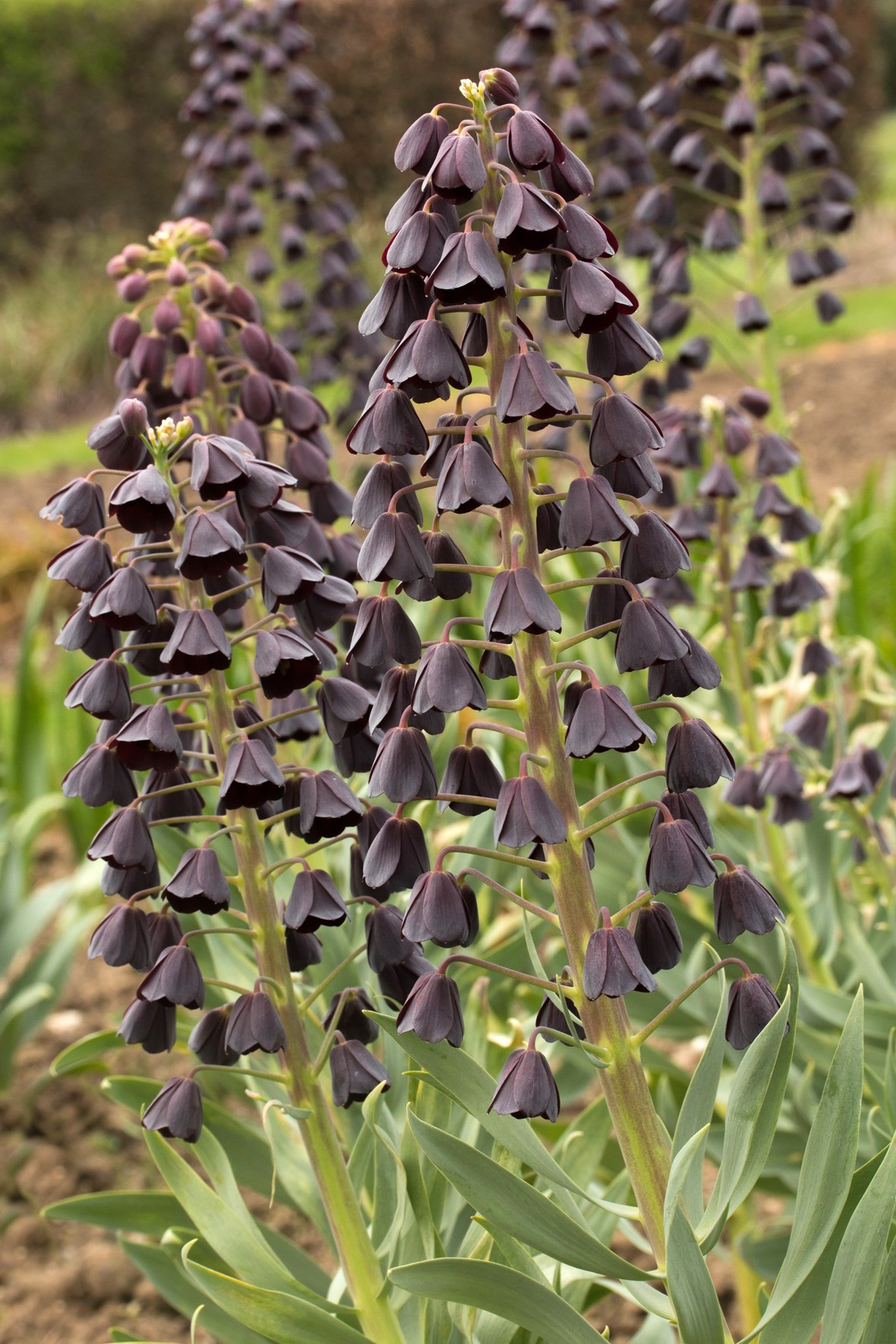
Fritillaria persica
Order Code: 85-37SEE DELIVERY UPDATES ON MAIN PAGE
from £7.49 to £19.95
Among the most dramatic and sophisticated spring bulbs, Fritillaria persica, commonly known as the Persian Lily, produces tall, stately flower spikes crowded with dozens of elegant bell-shaped blooms in rich shades of deep plum-purple, aubergine and smoky black.
Native to the rocky hillsides of Turkey, Iran and the Middle East, this striking species brings an exotic architectural presence to the garden. Rising above glaucous blue-grey foliage, the densely packed flowers create an almost spire-like effect, making Fritillaria persica one of the most distinctive and sought-after spring-flowering bulbs.
The dark, lustrous flowers provide a dramatic contrast to lighter spring bulbs such as tulips, narcissus and alliums. Their unusual colouring appears almost black in certain lights, lending an air of sophistication and mystery to borders and gravel gardens.
Awarded the RHS Award of Garden Merit, Fritillaria persica is surprisingly easy to grow provided it is given excellent drainage and a sunny position. Once established, it returns reliably each spring, producing taller and more impressive stems over time.
A truly magnificent bulb that adds height, drama and elegance to any spring garden.
Planting Instructions
When to Plant:
Plant Fritillaria persica bulbs in autumn, ideally between September and November, while the soil remains workable.
Where to Plant:
Choose a position in full sun or light partial shade with fertile, free-draining soil. Persian Lilies perform best in sheltered locations where winter wet is avoided.
How to Plant:
- Depth: Plant bulbs approximately 15–20 cm (6–8 inches) deep.
- Spacing: Space bulbs about 20–25 cm (8–10 inches) apart.
- Soil Prep: Improve drainage by incorporating grit or sharp sand into heavy soils. Add compost or well-rotted organic matter before planting.
Watering:
Water after planting to settle the soil. Once established, only water during prolonged dry spells, as excessive moisture around the bulbs can cause rot.
Aftercare Tips:
- Allow foliage to die back naturally after flowering.
- Avoid disturbing established bulbs unnecessarily.
- Apply a light mulch of compost annually to maintain soil fertility.
Top Tip:
Plant against a backdrop of silver or pale green foliage plants to highlight the dramatic dark flowers and architectural flower spikes.
Plant Details
Flowering Period:
April – May (depending on season and conditions)
Height:
24–40" (60–100cm) (approx.)
Position:
Full sun or partial shade
Hardy Perennial
Recently Viewed


Avon Bulbs and Plants Ltd
Blows Lane
Sutterton
Boston
Lincs
PE20 2EJ
Tel: 07425 833906
Registered in the UK. 15837617
Copyright 2026 Avon Bulbs. All rights reserved