
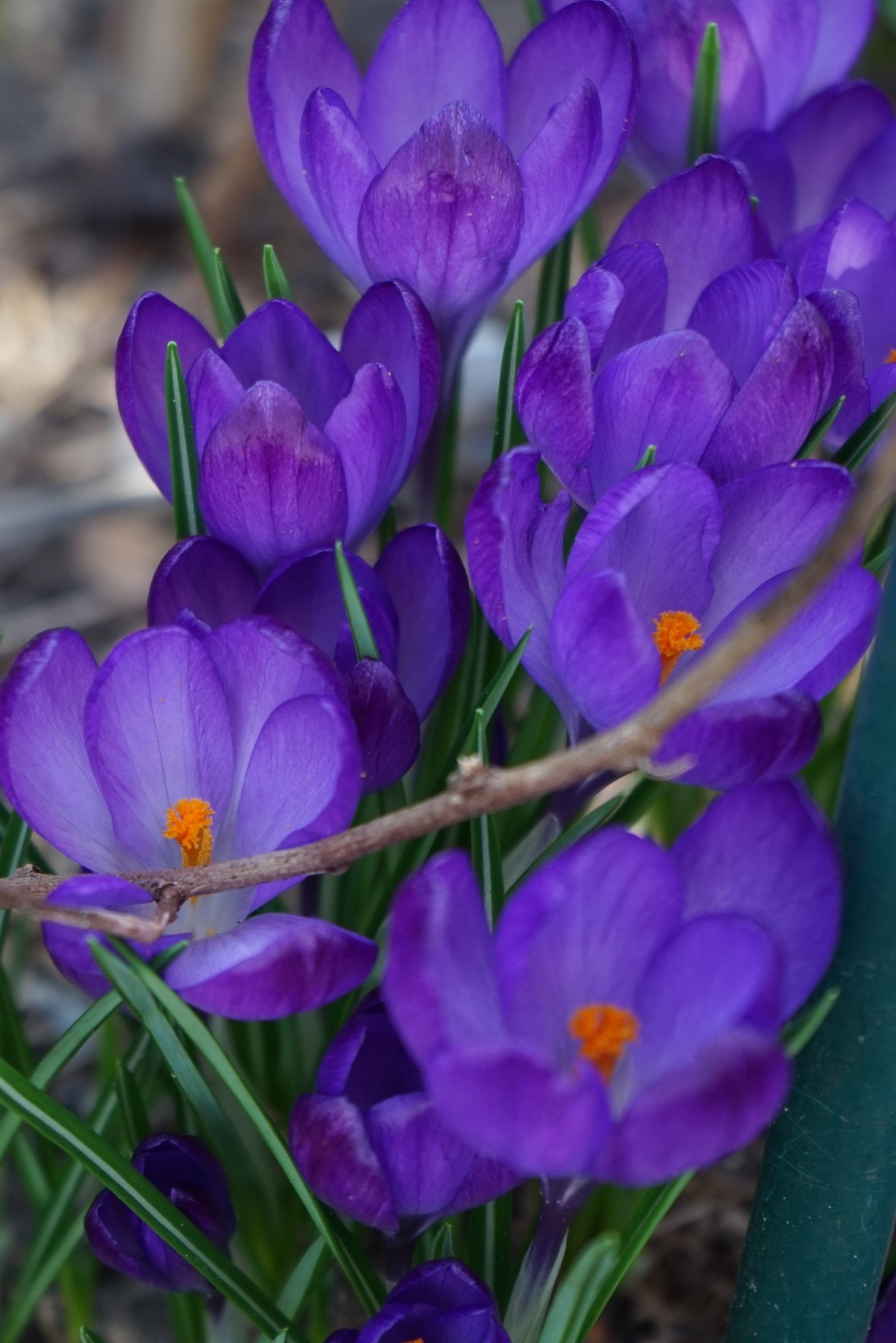
Crocus tommasinianus Barrs Purple
Order Code: 78-77SEE DELIVERY UPDATES ON MAIN PAGE
from £3.50 to £11.00
A superb early-flowering crocus and one of the very best varieties for naturalising, Crocus tommasinianus 'Barr's Purple' produces elegant, goblet-shaped flowers in rich violet-purple shades from late winter into early spring.
Named after the celebrated Irish gardener E. A. Bowles' friend, Mrs Barr, this beautiful selection has been a garden favourite for over a century. The flowers are slightly more richly coloured than the species, with slender petals that open wide in sunshine to reveal glowing golden stamens. Viewed en masse, the effect is a shimmering carpet of purple that brightens the garden when little else is in bloom.
Unlike many larger crocuses, Crocus tommasinianus is particularly resistant to disturbance by squirrels and other wildlife and is renowned for its ability to naturalise freely. Over time, the corms multiply and self-seed gently, creating ever-expanding drifts of colour beneath trees, through lawns and along woodland edges.
The nectar-rich flowers are an invaluable source of food for bees and other early pollinating insects emerging after winter. Easy to grow and wonderfully reliable, 'Barr's Purple' is one of the finest bulbs for bringing natural beauty and early colour to the garden.
Planting Instructions
When to Plant:
Plant Crocus corms in autumn, ideally between September and November, before the ground freezes.
Where to Plant:
Choose a position in full sun or partial shade with well-drained soil. Crocuses are ideal for borders, rock gardens, containers and naturalising in lawns or beneath deciduous trees.
How to Plant:
- Depth: Plant corms approximately 5–8 cm (2–3 inches) deep.
- Spacing: Space corms about 5–8 cm (2–3 inches) apart.
- Soil Prep: Improve heavy soils with grit or sharp sand to ensure good drainage.
Watering:
Water after planting to settle the soil. Once established, Crocus corms require very little additional watering.
Aftercare Tips:
- Allow foliage to die back naturally after flowering.
- If planted in grass, avoid mowing until the leaves have yellowed.
- Leave clumps undisturbed to encourage natural multiplication and self-seeding.
Top Tip:
Plant in large drifts beneath deciduous trees or through lawns for a spectacular carpet of colour that will increase year after year.
Plant Details
Flowering Period:
February – March (depending on season and conditions)
Height:
4–6" (10–15cm) (approx.)
Position:
Full sun or partial shade
Hardy Perennial
Recently Viewed

Avon Bulbs and Plants Ltd
Blows Lane
Sutterton
Boston
Lincs
PE20 2EJ
Tel: 07425 833906
Registered in the UK. 15837617
Copyright 2026 Avon Bulbs. All rights reserved