
Ornithogalum nutans
Order Code: 117-09SEE DELIVERY UPDATES ON MAIN PAGE
from £1.95 to £7.50
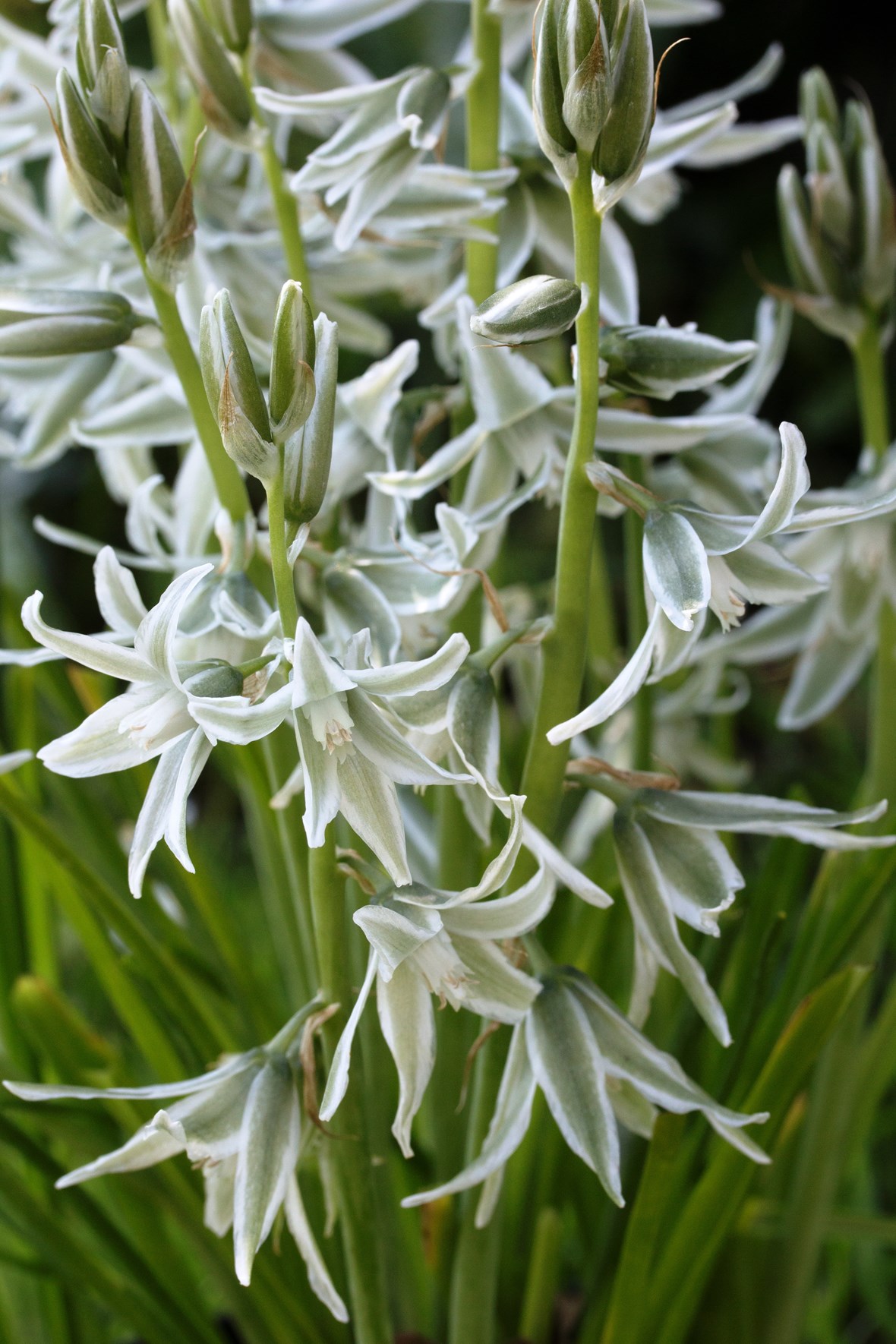
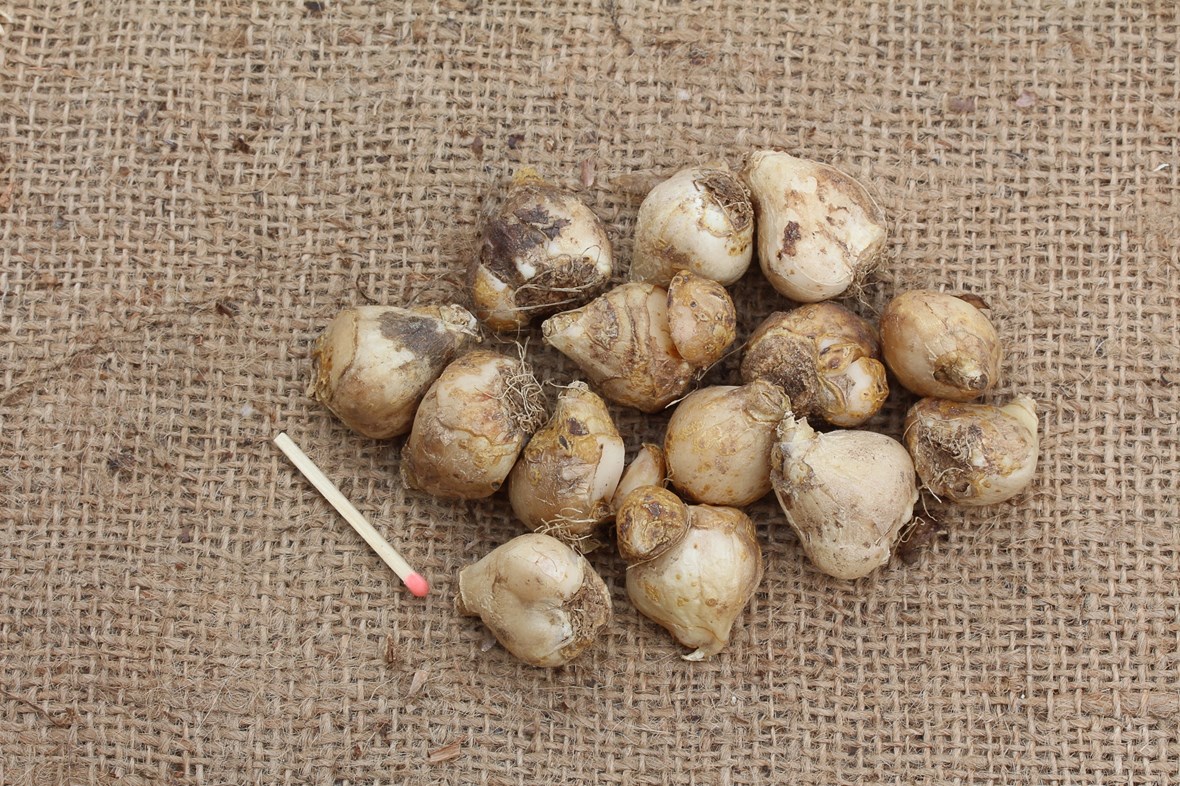
Graceful, unusual and steeped in history, Ornithogalum nutans, commonly known as the Drooping Star of Bethlehem, is a charming spring-flowering bulb that produces elegant, nodding clusters of pearly white flowers. Native to central and southern Europe, this beautiful species has been cultivated in gardens for centuries and is highly valued for its natural beauty and ease of cultivation.
Unlike the upright flowers of many other Ornithogalum species, Ornithogalum nutans bears gracefully drooping blooms, each with broad silvery-white petals beautifully marked by a distinctive green stripe on the reverse. As the flowers sway gently on arching stems, they create a delicate, almost lantern-like effect that adds movement and elegance to borders and woodland plantings.
Flowering in April and May, this reliable perennial thrives in woodland gardens, beneath deciduous trees, naturalised grass and cottage-style borders. Once established, it gradually spreads to form attractive colonies, producing an increasingly impressive display each spring. The flowers are also attractive to bees and other beneficial pollinating insects.
Easy to grow and wonderfully long-lived, Ornithogalum nutans is perfect for gardeners seeking a naturalistic spring display with subtle beauty and timeless charm.
Planting Instructions
When to Plant:
Plant Ornithogalum nutans bulbs in autumn, ideally between September and November, while the soil remains workable and before prolonged frost.
Where to Plant:
Choose a position in full sun or partial shade with well-drained, moderately fertile soil. This species is ideal for woodland gardens, borders, rockeries, beneath deciduous trees and naturalising in grass.
How to Plant:
- Depth: Plant bulbs approximately 8–10 cm (3–4 inches) deep.
- Spacing: Space bulbs about 10–15 cm (4–6 inches) apart.
- Soil Prep: Improve poor soils with garden compost or well-rotted organic matter. Add grit to heavy clay soils to improve drainage.
Watering:
Water thoroughly after planting to settle the soil. Once established, additional watering is only needed during prolonged dry spells in spring.
Aftercare Tips:
- Allow the foliage to die back naturally after flowering so the bulbs can replenish their energy.
- Leave clumps undisturbed to encourage natural multiplication.
- If naturalising in grass, delay mowing until the foliage has completely yellowed.
Top Tip:
Plant beneath deciduous trees alongside bluebells, Anemone nemorosa and Fritillaria meleagris for a beautiful woodland-inspired display that becomes more impressive each year.
Plant Details
Flowering Period:
April – May (depending on season and conditions)
Height:
8–12" (20–30cm) (approx.)
Position:
Full sun or partial shade
Hardy Perennial
Recently Viewed

Avon Bulbs and Plants Ltd
Blows Lane
Sutterton
Boston
Lincs
PE20 2EJ
Tel: 07425 833906
Registered in the UK. 15837617
Copyright 2026 Avon Bulbs. All rights reserved