
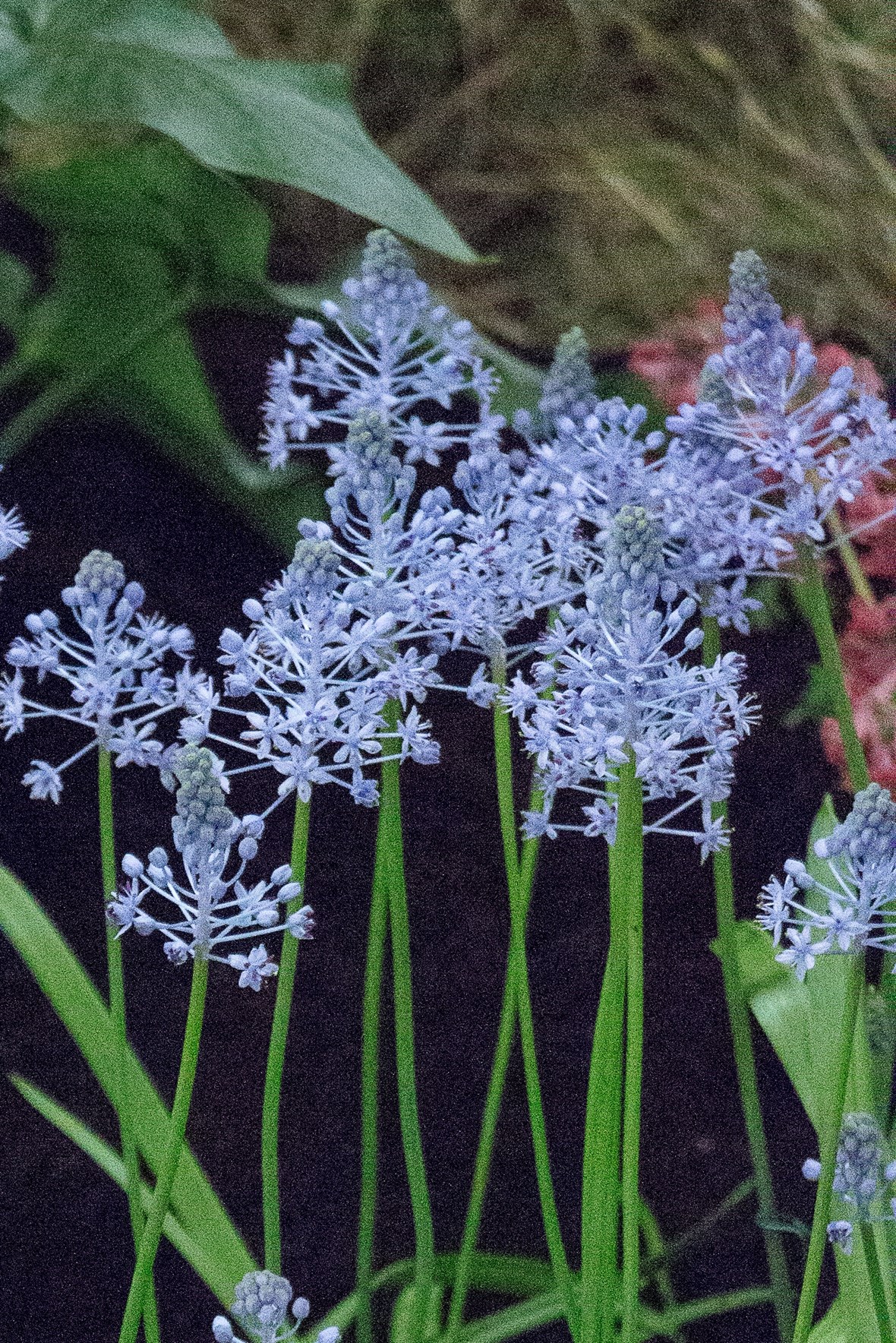
Scilla litardierei

SEE DELIVERY UPDATES ON MAIN PAGE
from £4.95 to £10.95
Graceful, natural and wonderfully free flowering, Scilla litardierei, commonly known as the Amethyst Meadow Squill, produces airy sprays of star-shaped flowers in shimmering shades of lavender-blue and amethyst, creating the effect of a delicate blue mist drifting across the garden.
Native to the mountain meadows of Croatia and the western Balkans, this charming species is quite unlike the more familiar spring-flowering Scillas. Its slender stems carry loose clusters of elegant flowers above narrow grass-like foliage, giving it a light, meadow-like appearance that blends beautifully amongst ornamental grasses and herbaceous perennials.
Flowering in late spring and early summer, Scilla litardierei extends the season long after most other Scillas have finished. It is particularly effective planted in naturalistic borders, wildflower meadows, cottage gardens or allowed to weave through lawns, where it slowly naturalises into graceful colonies.
Despite its delicate appearance, this is a remarkably hardy and reliable bulb that will gradually increase over time with very little maintenance. The nectar-rich flowers are also highly attractive to bees, butterflies and other beneficial pollinating insects.
A charming and unusual species that brings movement, elegance and a natural meadow feel to the late spring garden.
Planting Instructions
When to Plant:
Plant Scilla litardierei bulbs in autumn, ideally between September and November, before the ground freezes.
Where to Plant:
Choose a position in full sun or partial shade with well-drained, moderately fertile soil. Perfect for meadow planting, cottage gardens, borders, woodland edges and naturalising in lawns.
How to Plant:
- Depth: Plant bulbs approximately 8–10 cm (3–4 inches) deep.
- Spacing: Space bulbs about 10–15 cm (4–6 inches) apart.
- Soil Prep: Improve heavy soils with grit or compost to improve drainage while maintaining soil fertility.
Watering:
Water thoroughly after planting to settle the soil around the bulbs. During active spring growth, keep the soil evenly moist, although established bulbs tolerate short dry periods.
Aftercare Tips:
- Allow foliage to die back naturally after flowering.
- Leave bulbs undisturbed so they can slowly multiply and naturalise.
- Divide overcrowded clumps every 4–5 years if flowering becomes reduced.
Top Tip:
Plant amongst Camassias, Alliums and ornamental grasses for a beautiful naturalistic planting scheme that provides weeks of late spring colour.
Plant Details
Flowering Period:
May – June (depending on season and conditions)
Height:
10–16" (25–40cm) (approx.)
Position:
Full sun or partial shade
Hardy Perennial
Recently Viewed

Avon Bulbs and Plants Ltd
Blows Lane
Sutterton
Boston
Lincs
PE20 2EJ
Tel: 07425 833906
Registered in the UK. 15837617
Copyright 2026 Avon Bulbs. All rights reserved