
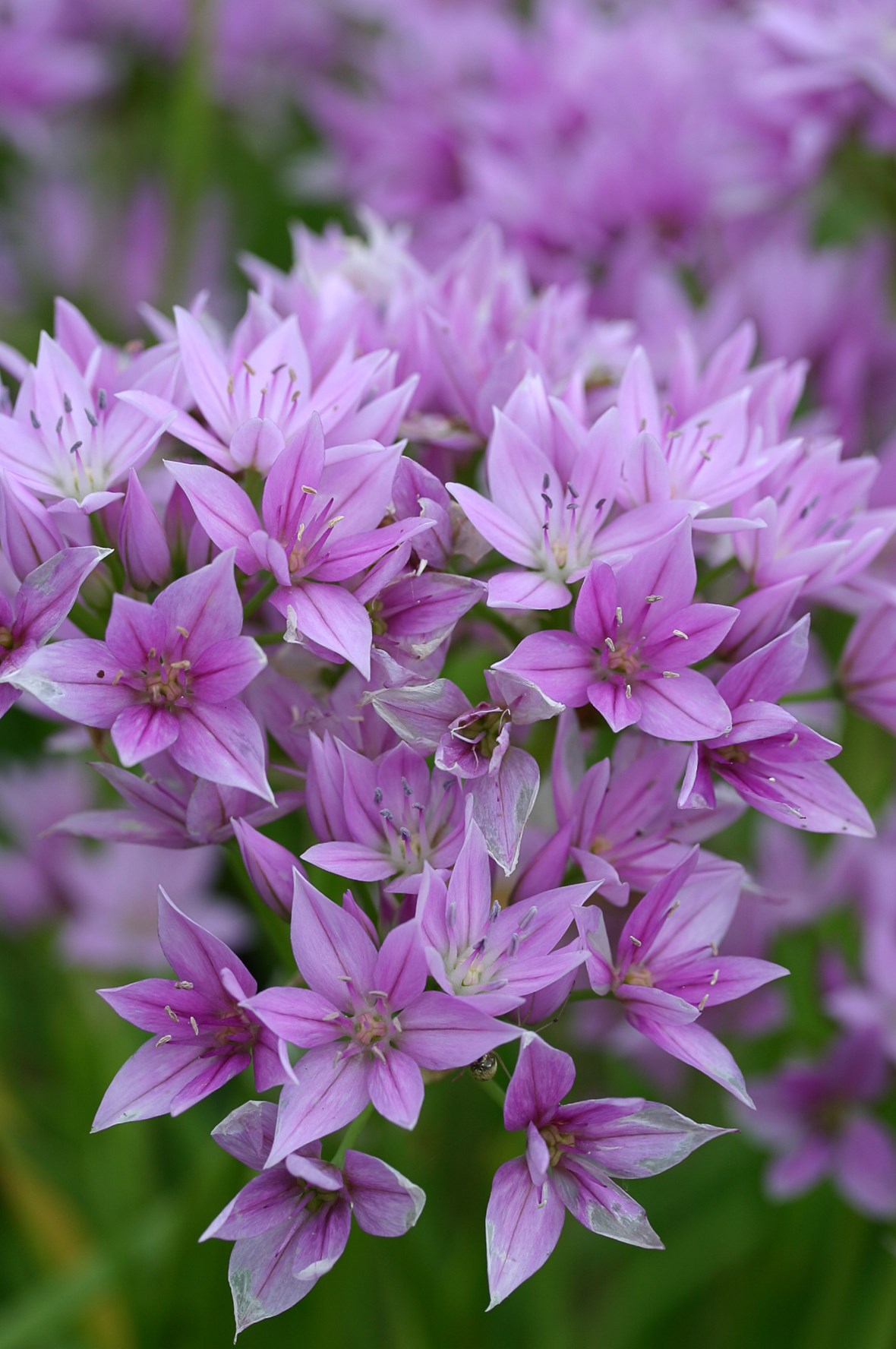
Allium unifolium
Order Code: 53-54SEE DELIVERY UPDATES ON MAIN PAGE
from £2.50 to £11.50
Graceful, colourful and wonderfully easy to grow, Allium unifolium produces loose rounded clusters of rosy-pink to lilac star-shaped flowers that bring softness and movement to the late spring and early summer garden.
Held on slender upright stems above narrow green foliage, the airy flower heads have a relaxed and natural appearance that blends beautifully into cottage garden borders, gravel gardens and prairie-style planting schemes. The delicate colouring combines especially well with pastel perennials, ornamental grasses and other naturalistic plants.
Native to western North America, particularly California, Allium unifolium has long been admired for its elegant simplicity, reliable flowering and pollinator-friendly nature. The nectar-rich blooms are highly attractive to bees and beneficial insects, helping to support wildlife throughout the flowering season.
Compact, reliable and easy to naturalise, this charming ornamental allium is perfect for gardeners looking to create a softer and more informal style of planting with long-lasting seasonal interest.
Planting Instructions
When to Plant:
Plant Allium bulbs in autumn (September–November) before the ground freezes. This allows roots to establish for strong flowering the following season.
Where to Plant:
Choose a sunny position with well-drained soil. Allium unifolium is ideal for borders, gravel gardens and naturalistic planting schemes. Avoid areas where soil remains wet over winter.
How to Plant:
- Depth: Plant bulbs about 8–10 cm (3–4 inches) deep.
- Spacing: Space bulbs about 10–15 cm (4–6 inches) apart.
- Soil Prep: Improve soil with compost. In heavier soils, add grit or sharp sand to improve drainage.
Watering:
Water after planting. Once established, Alliums require very little additional watering unless conditions are particularly dry.
Aftercare Tips:
- Allow foliage to die back naturally after flowering to feed the bulb.
- Deadhead if desired, or leave seed heads for natural interest.
- Bulbs may gradually naturalise and form larger clumps over time.
Top Tip:
Plant in informal drifts amongst ornamental grasses and cottage garden perennials for a relaxed, flowing display full of movement and pollinator-friendly flowers.
Plant Details
Flowering Period:
May – June (depending on season and conditions)
Height:
12–18" (30–45cm) (approx.)
Position:
Full sun
Hardy Perennial
Recently Viewed

Avon Bulbs and Plants Ltd
Blows Lane
Sutterton
Boston
Lincs
PE20 2EJ
Tel: 07425 833906
Registered in the UK. 15837617
Copyright 2026 Avon Bulbs. All rights reserved