
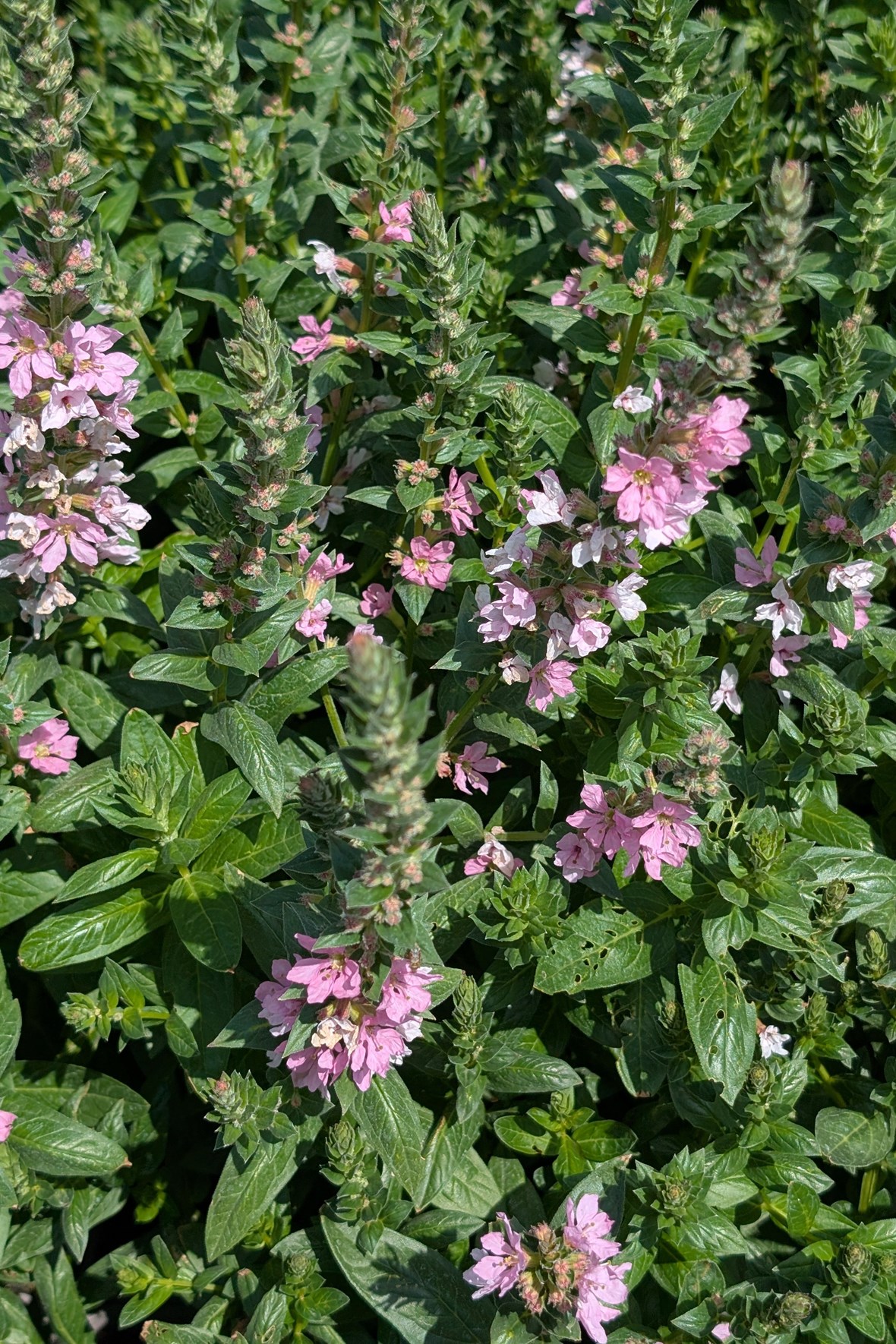
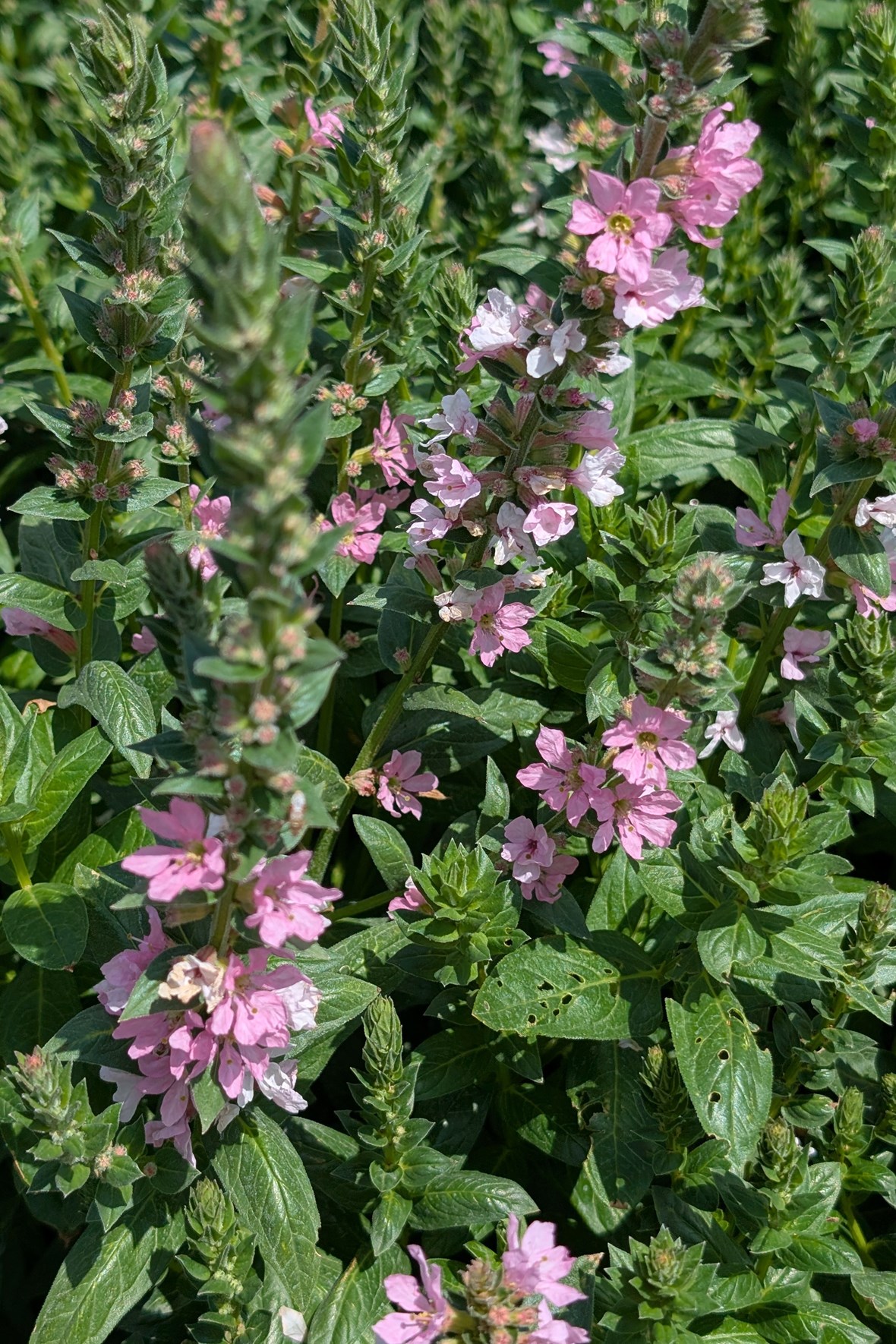
Lythrum salicaria Blush 2ltr
Order Code: 420-10SEE DELIVERY UPDATES ON MAIN PAGE
from £7.50 to £19.50
Graceful, elegant and wonderfully different from the traditional purple loosestrife, Lythrum salicaria 'Blush' produces tall, airy spires of soft blush-pink flowers that bring a gentle, naturalistic beauty to the summer garden. Blooming over many weeks from midsummer into early autumn, its delicate flower spikes sway effortlessly in the breeze, creating movement and attracting a wealth of bees, butterflies and other beneficial pollinating insects.
A softer-coloured form of our native Purple Loosestrife, 'Blush' retains all the vigour and wildlife value of the species but offers a more subtle, romantic colour palette. The slender flower spikes rise above upright clumps of rich green foliage, making this variety an excellent choice for mixed borders, prairie-style planting, cottage gardens and wildlife-friendly landscapes.
Thriving in moisture-retentive soils, Lythrum 'Blush' is particularly well suited to the edges of ponds, streams and bog gardens, although it also performs beautifully in ordinary garden borders provided the soil does not dry out completely.
Long-flowering, easy to grow and exceptionally hardy, this elegant perennial provides colour when many early summer flowers have finished and continues to support pollinators well into autumn.
Planting Instructions
When to Plant:
Plant Lythrum 'Blush' from spring through to autumn, avoiding periods when the ground is frozen or waterlogged. Spring planting allows plants to establish quickly before their first flowering season.
Where to Plant:
Choose a position in full sun or light partial shade with moist, fertile soil. Ideal for pond margins, bog gardens, damp borders, wildlife gardens and naturalistic planting schemes.
How to Plant:
- Depth: Plant with the top of the rootball level with the surrounding soil.
- Spacing: Allow 45–60cm (18–24 inches) between plants.
- Soil Prep: Incorporate plenty of garden compost or well-rotted organic matter before planting to help retain moisture and improve soil fertility.
Watering:
Water thoroughly after planting and keep the soil consistently moist during the first growing season. Once established, plants tolerate short dry spells but perform best in reliably moist soil.
Aftercare Tips:
- Deadhead spent flower spikes to prolong flowering.
- Feed with a balanced fertiliser each spring.
- Cut stems back to ground level after the foliage has died back in autumn or leave them standing over winter for wildlife before cutting back in early spring.
- Divide established clumps every 3–5 years to maintain vigour.
Top Tip:
Plant alongside Iris sibirica, Persicaria, Filipendula and ornamental grasses for a beautiful naturalistic planting scheme that buzzes with pollinating insects throughout summer.
Plant Details
Flowering Period:
July – September (depending on season and conditions)
Height:
36–48" (90–120cm) (approx.)
Position:
Full sun or light partial shade
Hardy Perennial
Excellent for Bees & Pollinators
Suitable for Pond Margins & Moist Borders
Recently Viewed

Avon Bulbs and Plants Ltd
Blows Lane
Sutterton
Boston
Lincs
PE20 2EJ
Tel: 07425 833906
Registered in the UK. 15837617
Copyright 2026 Avon Bulbs. All rights reserved