
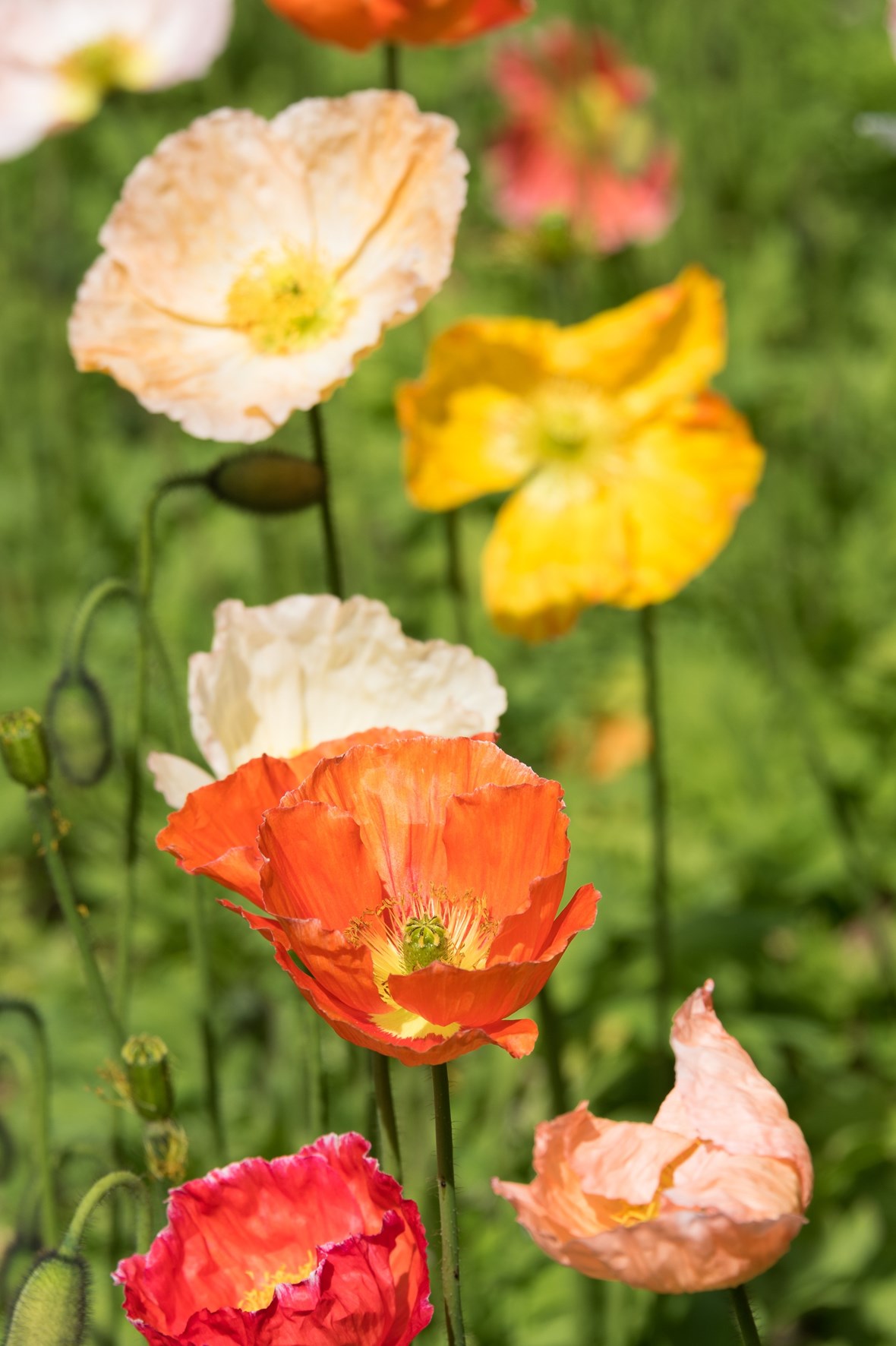
Papaver 'Orientale' Pizzicato 2ltr
Order Code: 419-07SEE DELIVERY UPDATES ON MAIN PAGE
from £8.50 to £24.00
Papaver orientale ‘Pizzicato’ is a fabulous Oriental poppy that brings big, joyful colour to the garden in late spring and early summer. It produces large, silky flowers on strong stems, typically in a vibrant mix of shades (commonly reds, oranges, pinks and whites, often with dark centres), making every plant feel a little unique. It’s perfect for anyone who loves a more natural, cottage-garden look—bold blooms, wildlife-friendly planting, and that “stop you in your tracks” poppy wow-factor.
Just like other Oriental poppies, it often dies back after flowering and takes a rest for a while—completely normal and part of its rhythm. Plant it with later-emerging perennials (Salvias, hardy geraniums, daylilies) so the border still looks full once the poppy foliage disappears.
Planting Instructions
When to Plant:
Plant in spring or autumn, while the soil is moist and workable. Container-grown plants can be planted most of the year, avoiding periods when the ground is frozen or waterlogged.
Where to Plant:
Choose a sunny position with well-drained soil. Oriental poppies prefer soil that drains freely and dislike sitting wet in winter. Ideal for mixed borders, cottage gardens and wildlife-friendly planting.
How to Plant:
- Depth: Plant so the top of the rootball is level with the soil surface.
- Spacing: Space 45–60 cm (18–24 inches) apart to allow room for the clump to develop.
- Soil Prep: Little enrichment is needed—just ensure good drainage. On heavy soils, mix in a little horticultural grit.
Watering:
Water well after planting. Keep the soil evenly moist while the plant establishes, then water only during prolonged dry spells. Avoid waterlogged conditions, especially in winter.
Aftercare Tips:
- Deadhead spent blooms to keep things tidy (or leave seedheads if you enjoy the structure).
- After flowering, foliage may die back and go dormant — this is normal. Mark the plant so you don’t disturb it.
- Cut back old foliage when it has completely died down and new growth starts to appear.
Top Tip:
Papaver ‘Pizzicato’ looks brilliant planted in drifts for a natural effect. Combine with Nepeta, Alliums and later perennials like Salvias or hardy geraniums to keep the border colourful once the poppies have finished.
Plant Details
Flowering Period:
May – June
Height:
18–24" (45–60cm)
Position:
Full sun
Hardy Perennial
Recently Viewed

Avon Bulbs and Plants Ltd
Blows Lane
Sutterton
Boston
Lincs
PE20 2EJ
Tel: 07425 833906
Registered in the UK. 15837617
Copyright 2026 Avon Bulbs. All rights reserved