
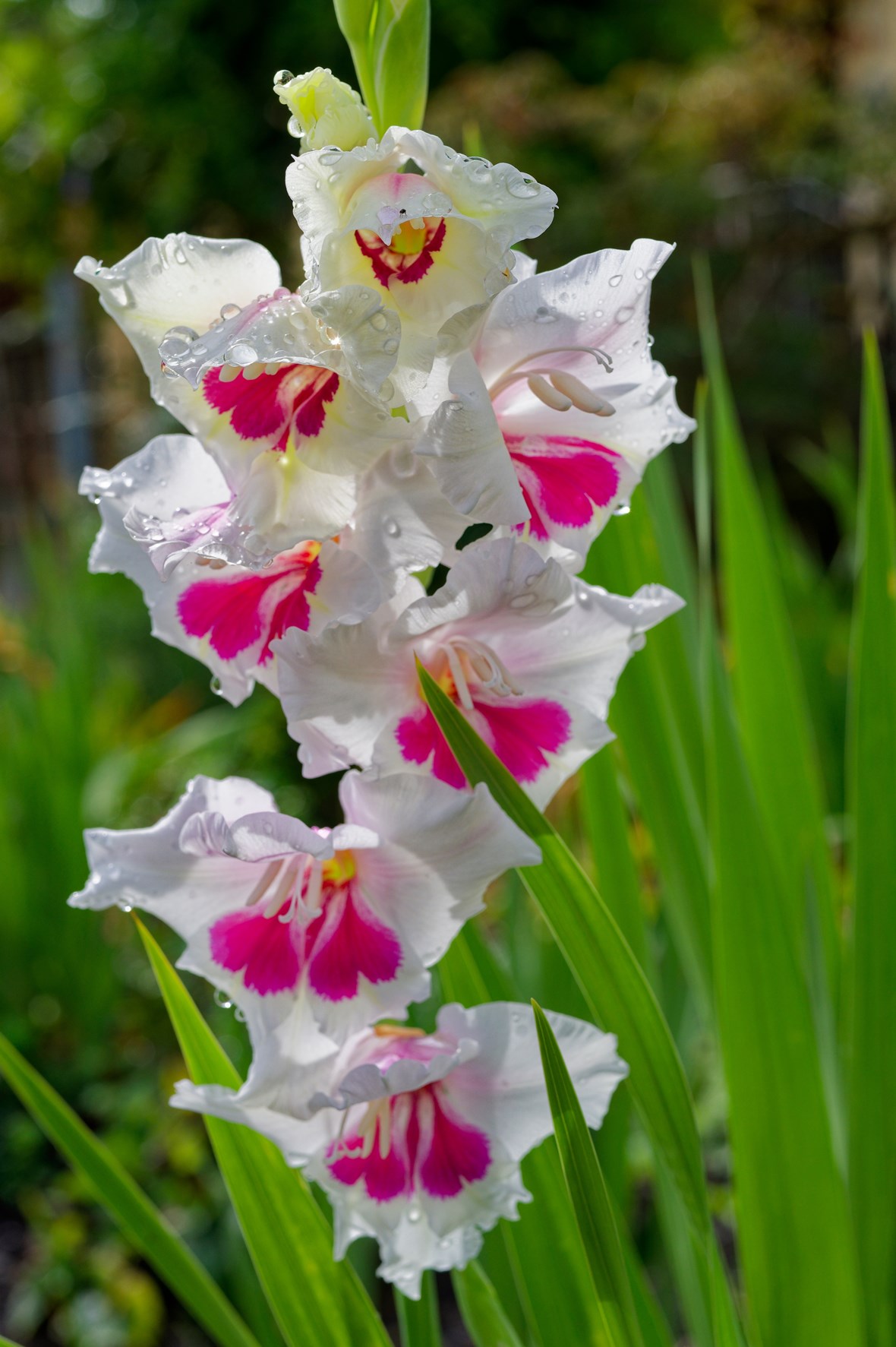
Gladiolus Carine
Order Code: 88-20Delivered to you from March/April
from £2.50 to £4.00
Gladiolus carine is a truly charming, more delicate style of gladiolus, loved for its elegant, cream-white flowers beautifully marked with striking pink to crimson splashes and glowing throats. Unlike the big, bold “florist” gladioli, this variety has a lighter, airier look—perfect for weaving through sunny borders for a natural, meadow-like feel. The blooms sit on slender stems and open in succession, giving you a long display in midsummer, and they’re also excellent as cut flowers (they last brilliantly in a vase).
A lovely fact: Gladiolus is often nicknamed the “sword lily” thanks to its upright flower spikes and blade-like foliage—yet ‘carine’ brings a softer, more romantic twist with its painterly markings. It’s also a great way to add height and drama without overpowering nearby plants, and it mixes beautifully with grasses, Salvias, Achillea and Echinacea. Plant a few groups and you’ll get that “wow, where did those come from?” moment when the stems suddenly appear and flower.
Planting Instructions
When to Plant:
Plant in spring once the risk of frost has passed and the soil is warming up. In milder areas, you can also plant in late spring for succession.
Where to Plant:
Choose a sunny, sheltered position with well-drained soil. Gladiolus prefers a warm spot and dislikes sitting in winter wet. Ideal for mixed borders, cutting gardens, or gravel gardens. For best results, plant in groups for a natural display.
How to Plant:
- Depth: Plant corms about 10–12 cm (4–5 inches) deep, with the pointed side facing up.
- Spacing: Space 10–15 cm (4–6 inches) apart, or cluster in groups of 7–15 for impact.
- Soil Prep: Work in a little compost to improve drainage and structure if needed. Avoid heavy, wet soil—add grit or sand to help drainage.
Watering:
Water after planting and keep lightly moist as shoots appear. Once growing strongly, water during dry spells—especially while buds are forming and flowering.
Aftercare Tips:
- Provide discreet support if grown in a windy spot to prevent stems from leaning.
- Deadhead spent flowers to keep plants tidy and encourage the corm to build strength.
- After flowering, leave foliage in place until it yellows naturally—this feeds the corm for next year.
- In colder or wetter areas, lift corms in autumn once foliage has died back, dry them off and store frost-free over winter.
Top Tip:
For a longer flowering season, plant a few corms every 2–3 weeks from late spring into early summer. You’ll get waves of blooms right through the season—perfect for cutting and for keeping borders looking fresh.
Plant Details
Flowering Period:
July - September (varies with planting time)
Height:
24–36" (60–90cm)
Position:
Full sun
Type:
Summer-flowering corm
Recently Viewed

Avon Bulbs and Plants Ltd
Blows Lane
Sutterton
Boston
Lincs
PE20 2EJ
Tel: 07425 833906
Registered in the UK. 15837617
Copyright 2026 Avon Bulbs. All rights reserved