
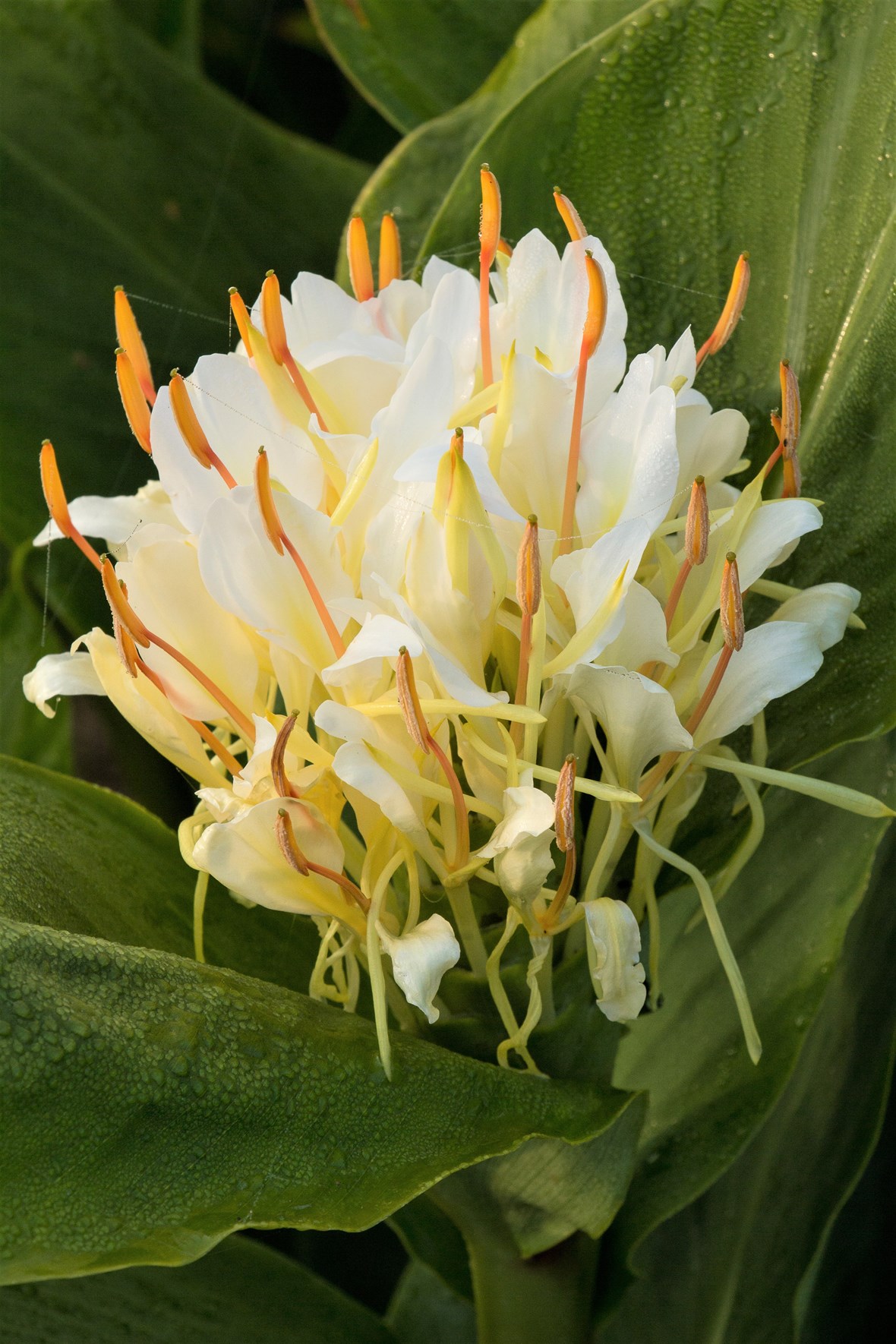
Hedychium Ellipticum
Order Code: 27-04Delivered to you from March/April
from £6.00 to £15.00
Hedychium ellipticum is a real showstopper for exotic-style planting, bringing lush, tropical-looking foliage and beautifully scented, creamy-white flower spikes in late summer and early autumn. Sometimes called a “hardy ginger lily”, it forms upright clumps of broad, fresh green leaves, creating instant jungle vibes in borders and large containers. The flowers are wonderfully fragrant (often compared to jasmine or honeysuckle) and are a magnet for late-season pollinators.
A brilliant fact: Hedychiums are grown from rhizomes (like ginger), and once settled they can slowly bulk up into impressive clumps year after year. Given warmth, moisture and a sheltered spot, Hedychium ellipticum can reward you with that rare combination in the UK garden—exotic looks and genuine perfume right when many summer flowers are beginning to fade.
Planting Instructions
When to Plant:
Plant bare roots/rhizomes in spring once the risk of hard frost has passed, or pot up under cover in early spring to get growth started.
Where to Plant:
Choose a sheltered position in full sun or partial shade with moisture-retentive, fertile, well-drained soil. Hedychium loves warmth and consistent moisture in summer. Ideal for exotic borders, tropical-style planting, or large patio containers. In colder areas, a spot against a sunny wall is perfect.
How to Plant:
- Depth: Plant the rhizome 5–8 cm deep, with any buds/growing points facing upwards.
- Spacing: Space 45–60 cm (18–24 inches) apart to allow clumps to develop.
- Soil Prep: Mix in well-rotted compost to enrich the soil and help it hold moisture. Good drainage is important—avoid waterlogged ground.
Watering:
Water well after planting and keep the soil consistently moist during the growing season, especially in warm weather. Plants in containers may need watering little and often in summer.
Aftercare Tips:
- Mulch in late spring/early summer to help retain moisture and feed the plant.
- As growth appears, protect young shoots from late frosts if needed.
- In autumn, once foliage dies back, cut stems down and apply a thick dry mulch (straw, bracken or bark) to protect the rhizomes over winter.
- In colder gardens, consider lifting and storing rhizomes frost-free, or grow in a pot that can be moved to shelter.
Top Tip:
For the best flowers, give Hedychium ellipticum heat, food and moisture through summer—think “warm and well-watered”. Planting near a wall or in a large pot you can move to shelter often gives the most reliable flowering in the UK.
Plant Details
Flowering Period:
August - October (best in warm summers)
Height:
36–60" (90–150cm) depending on conditions
Position:
Full sun / partial shade (sheltered)
Half-hardy Perennial (exotic rhizome)
Best with winter protection in most UK gardens.
Recently Viewed

Avon Bulbs and Plants Ltd
Blows Lane
Sutterton
Boston
Lincs
PE20 2EJ
Tel: 07425 833906
Registered in the UK. 15837617
Copyright 2026 Avon Bulbs. All rights reserved