
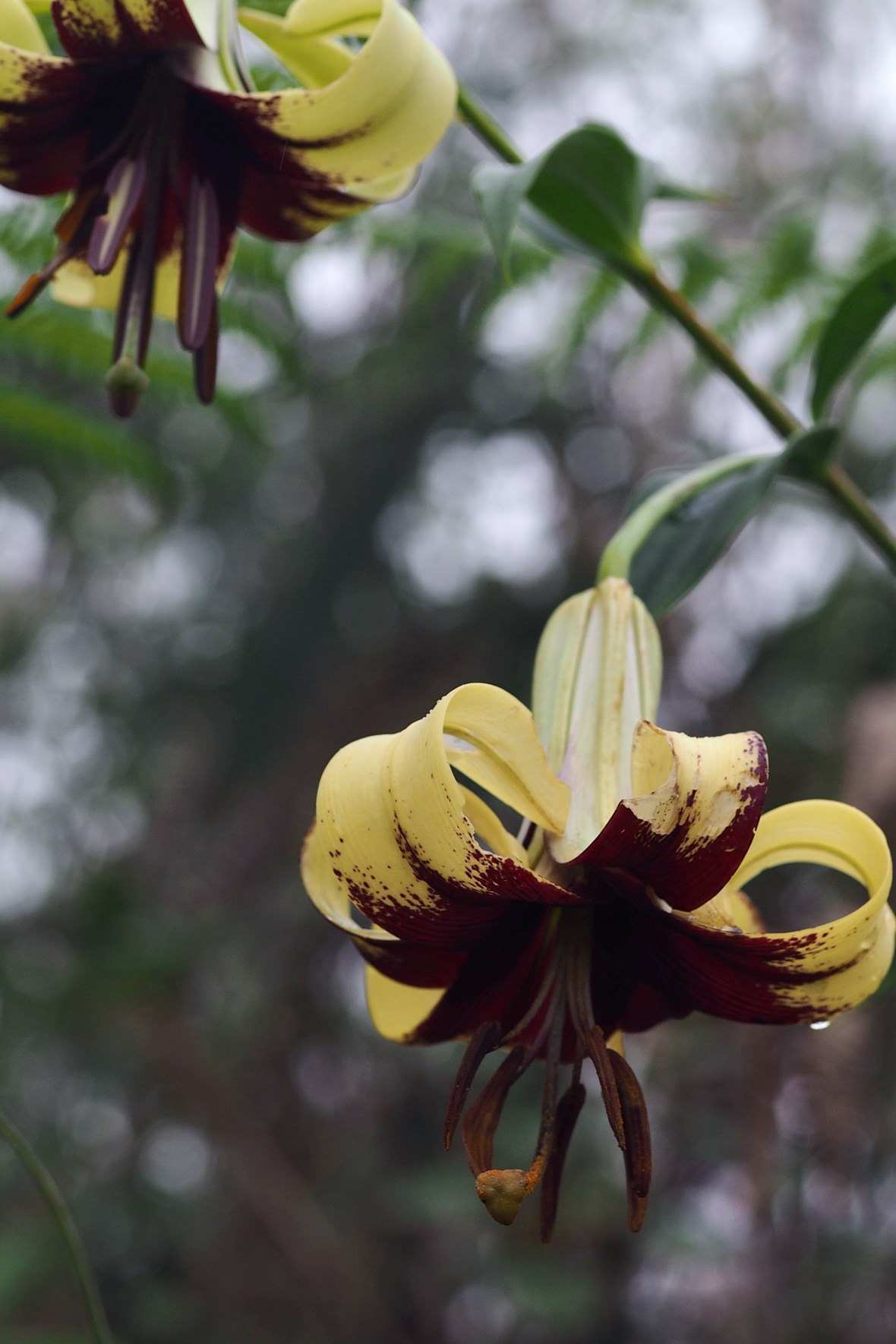
Lilium nepalense
Order Code: 107-24Delivered to you from March/April
from £12.00 to £18.00
Lilium nepalense is a real collector’s lily — unusual, elegant and totally different from the big “florist-style” hybrids. It produces pendant, long-tubed flowers in green to greenish-yellow, each bloom dramatically marked with a deep purple/maroon throat. The flowers hang downwards in a refined, almost exotic way, making it a brilliant talking point in borders and large pots.
It’s native to the Himalayan region (extending into SE Asia) and prefers a cool, sheltered spot with moist but well-drained, humus-rich, acidic soil — think woodland-edge conditions rather than hot, dry beds. It’s also worth knowing the bulb can be stoloniferous, meaning shoots may pop up a little distance from where you planted it (completely normal for this species!).
Buyer-friendly facts:
- Height: typically 0.5–1m (sometimes taller in ideal conditions)
- Position: partial shade, sheltered
- Soil: acid, moist but well-drained (protect from winter wet)
- Origin: Himalaya to Thailand
Planting Instructions
When to Plant:
Plant lily bulbs in spring once the soil is workable, or in autumn in milder areas. Avoid planting when the ground is frozen or waterlogged.
Where to Plant:
Choose a cool, sheltered position in partial shade with moist but well-drained, humus-rich, acid soil. Lilium nepalense dislikes winter wet, so it’s ideal in a raised bed, slope, or well-drained border and also performs well in a deep pot with excellent drainage.
How to Plant:
- Depth: Plant bulbs about 12–15 cm deep (roughly 2–3 times the bulb’s height), with the point facing up.
- Spacing: Space bulbs around 20–30 cm apart, or plant in small groups for a stronger display.
- Soil Prep: Mix in leaf mould or well-rotted compost for moisture-holding, plus grit to ensure sharp drainage (especially on heavier soils). Aim for an acid to neutral growing mix.
Watering:
Water well after planting. Keep the soil evenly moist in spring and early summer while it’s growing, but never waterlog. In winter, aim to keep bulbs on the dry side to prevent rotting.
Aftercare Tips:
- Support stems if grown in a windy spot.
- Deadhead spent blooms, but leave stems and foliage to die back naturally—this feeds the bulb for next year.
- Once foliage yellows, cut back to ground level.
- Remember: this species can be stoloniferous, so shoots may appear a short distance from the planting point.
Top Tip:
The old lily rule works well here: “feet cool, head in the light”. Let neighbouring plants shade the soil while the lily grows up into brighter light. Most importantly, protect from winter wet for long-term success.
Plant Details
Flowering Period:
June - July
Height:
20–40" (50–100cm)
Position:
Partial shade (sheltered)
Recently Viewed

Avon Bulbs and Plants Ltd
Blows Lane
Sutterton
Boston
Lincs
PE20 2EJ
Tel: 07425 833906
Registered in the UK. 15837617
Copyright 2026 Avon Bulbs. All rights reserved