
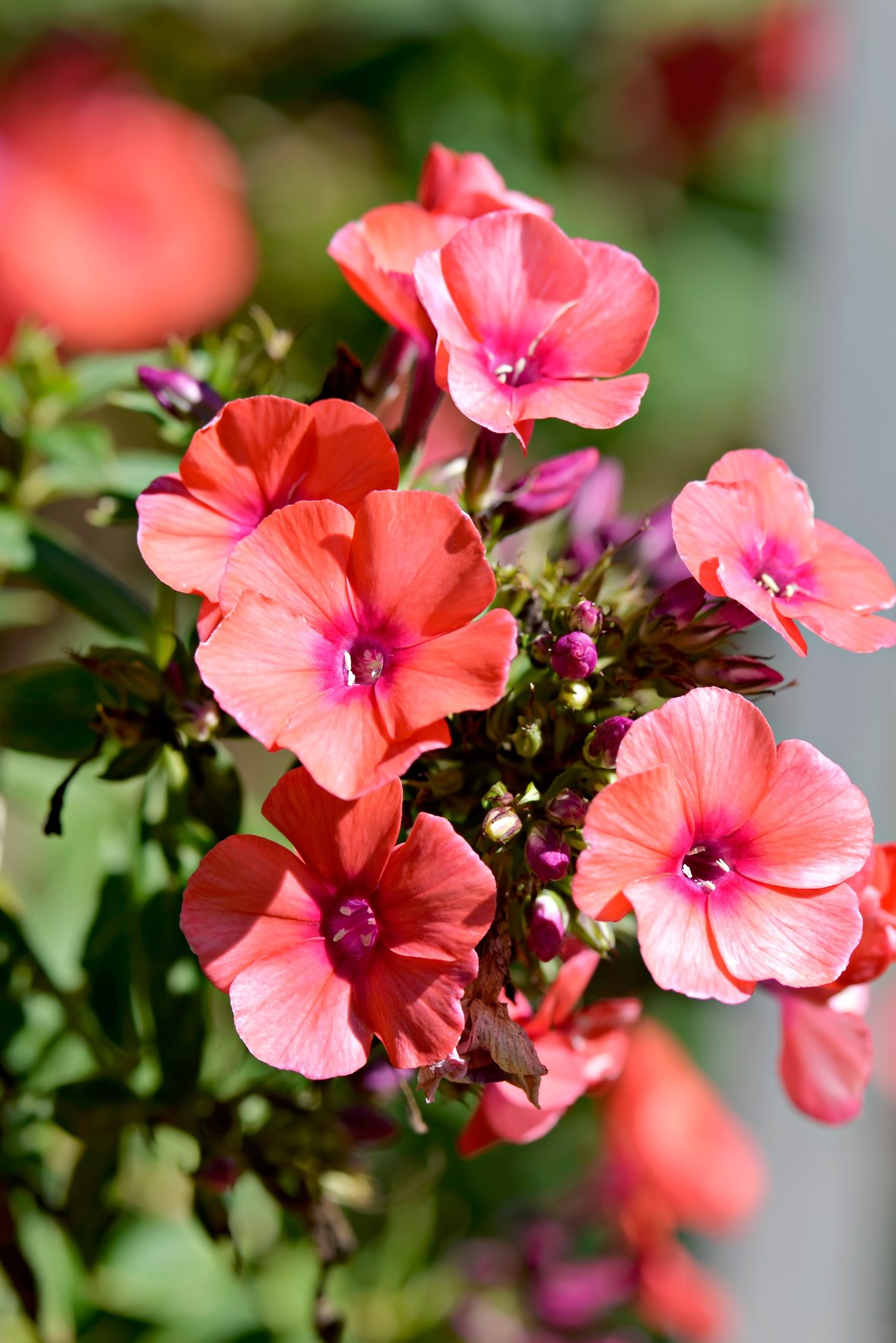
Phlox Orange Perfection
Order Code: 06-02SEE DELIVERY UPDATES ON MAIN PAGE
£3.50
Phlox ‘Orange Perfection’ is a real mood-lifter in the summer border, bringing large, domed clusters of warm salmon-orange flowers with a deeper eye—a colour that’s surprisingly hard to find in perennials and looks incredible against purples, blues, whites and silvery foliage. The flowers are delicately fragrant, rich in nectar, and a magnet for pollinators, making it a lovely choice for wildlife-friendly planting.
It forms a sturdy clump of leafy stems and gives weeks of colour from mid to late summer, especially if you keep it deadheaded. It’s also a brilliant cut flower—one stem can fill a vase, and the scent is a bonus.
Planting Instructions
When to Plant:
Plant in spring or autumn, while the soil is moist and workable. Container-grown plants can be planted most of the year, avoiding periods when the ground is frozen or waterlogged.
Where to Plant:
Choose a position in full sun or partial shade with fertile, moist but well-drained soil. Phlox performs best with consistent moisture and good airflow. Ideal for mixed borders, cottage gardens, wildlife-friendly planting, and cutting gardens.
How to Plant:
- Depth: Plant so the top of the rootball is level with the soil surface.
- Spacing: Space 45–60 cm (18–24 inches) apart to allow good air circulation.
- Soil Prep: Mix in a little garden compost to improve moisture-holding, but avoid over-rich soil.
Watering:
Water well after planting. Keep the soil evenly moist while the plant establishes and during dry spells. Once settled, it will cope better, but regular moisture gives the best flowering.
Aftercare Tips:
- Deadhead spent blooms to encourage a longer flowering period.
-
Plant Details
Flowering Period:
July – September
Height:
approx. 60–90cm
Position:
Full sun / Partial shade
Hardiness:
Hardy herbaceous perennial (dies back in winter, returns in spring)
Recently Viewed

Avon Bulbs and Plants Ltd
Blows Lane
Sutterton
Boston
Lincs
PE20 2EJ
Tel: 07425 833906
Registered in the UK. 15837617
Copyright 2026 Avon Bulbs. All rights reserved